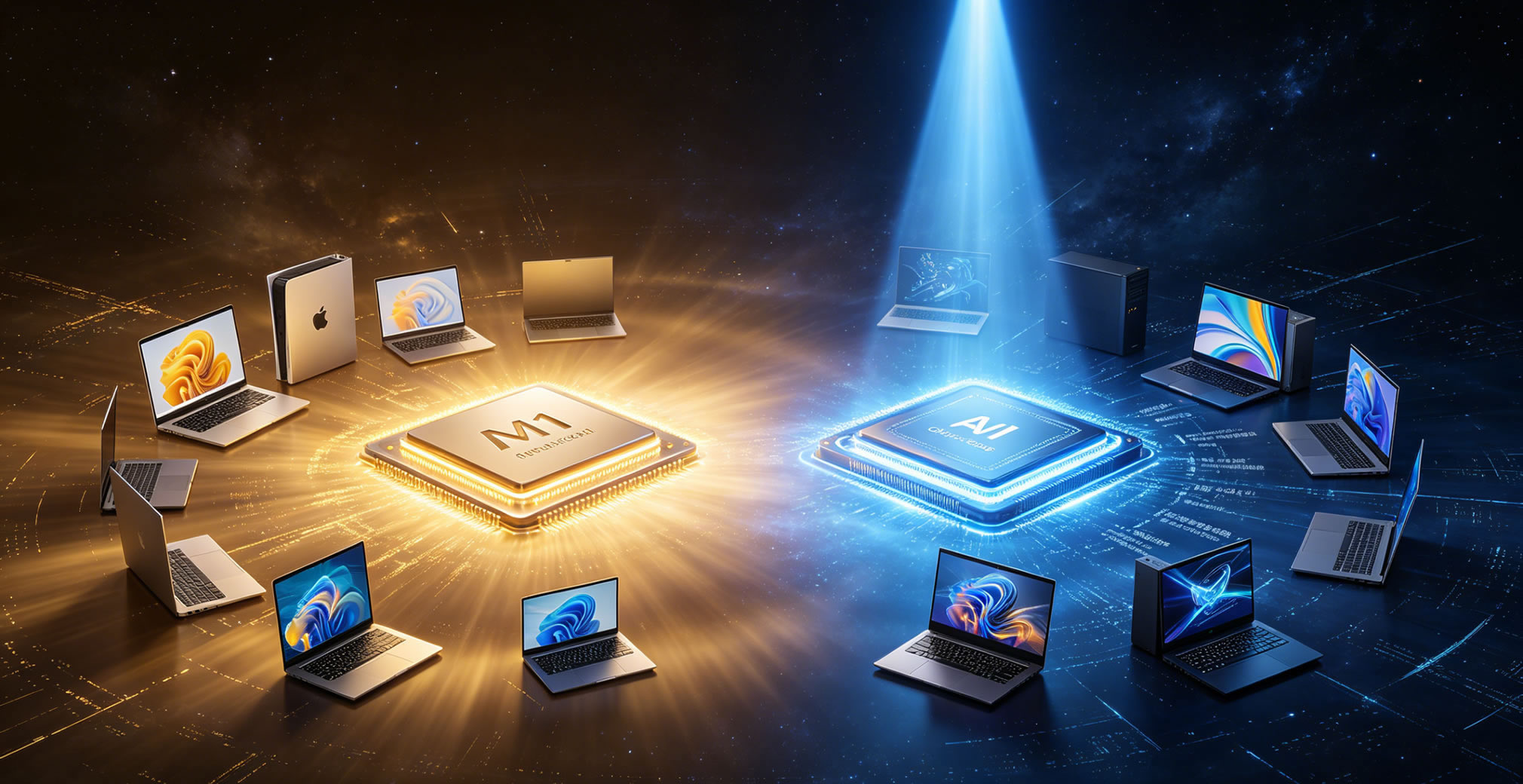
NVIDIA’s push into the ARM-based Windows PC market with its RTX Spark (N1X) superchip has stirred significant industry optimism, with many analysts viewing its advanced CPU, GPU and AI capabilities as a long-awaited breakthrough for the stagnating Windows-on-ARM ecosystem. Built on TSMC’s 3nm process and integrated with Grace CPU, Blackwell GPU and a unified memory architecture, the new chip lineup is widely regarded as a credible challenger to x86’s decades-long dominance in consumer and commercial PC markets. Nevertheless, polished marketing demonstrations and eye-catching benchmark figures obscure a core industry reality: NVIDIA’s ARM Windows PC initiative is hampered by persistent performance instability and structural compatibility flaws, making it highly unlikely to replicate Apple’s transformative M1 architectural revolution.
. Apple’s 2020 M1 launch marked one of the most influential architectural overhauls in modern computing history, delivering the first scalable, commercially successful migration from x86 to ARM for mainstream personal computers. The unparalleled success of Apple’s transition stems entirely from its full-stack vertical integration, which unifies custom silicon design, system-level software tuning and a tightly controlled proprietary ecosystem. The inaugural M1 chip delivered exceptional power efficiency, consistent cross-device operational performance, and robust dual compatibility for native ARM applications and emulated legacy x86 software, resolving longstanding user pain points in office productivity, creative production and mobile computing workloads. Within just two years, Apple fully phased out Intel processors across its entire Mac product lineup, securing widespread market recognition and stable user satisfaction.
In stark contrast, NVIDIA’s ARM Windows platform lacks such systematic end-to-end integration, resulting in erratic real-world performance that greatly diminishes practical user value. While official internal tests highlight outstanding peak computational throughput — with the RTX Spark’s GPU performance surpassing Qualcomm’s Snapdragon X Elite by 3.2 times and outperforming Intel’s Lunar Lake in generative AI tasks — independent third-party benchmarking exposes critical structural weaknesses. Geekbench 6 verified data shows that the N1X chip lags behind the base Apple M1 model in sustained single-core and multi-core performance, accompanied by obvious frame fluctuation and sudden power consumption spikes under prolonged high-load operating scenarios. Unlike Apple’s M-series chips, which maintain stable temperature control and consistent performance output during long-duration workloads, NVIDIA’s ARM architecture is optimized for short-term peak performance, triggering aggressive thermal throttling and significantly degraded long-term operational efficiency.
Software compatibility constitutes the most intractable structural barrier to NVIDIA’s Windows-on-ARM commercialization. Apple exercises absolute control over its closed-loop software ecosystem: all macOS applications are natively compiled for ARM instruction sets, while the Rosetta 2 emulation layer delivers near-native operating speed for legacy x86 software with negligible functional losses. The Windows ecosystem, by contrast, is inherently open, fragmented and decentralized, with the vast majority of professional creative tools, industrial software suites and enterprise business applications exclusively optimized for traditional x86 architectures. Despite joint optimization efforts from NVIDIA and Microsoft to adapt to mainstream consumer-level Windows 11 applications, almost all high-end professional industry software still relies entirely on x86 emulation on ARM-based Windows devices.
Emulation technology inevitably brings inherent latency, functional inconsistencies and measurable performance degradation — critical drawbacks that Apple has largely eliminated through in-depth system-level optimization, yet remain unavoidable for NVIDIA under the existing Windows ecosystem framework. Even equipped with full CUDA 12.x stack support and unified memory architectural advantages, NVIDIA fails to incentivize third-party developers to conduct targeted, bespoke optimization for its niche ARM Windows platform. The overwhelming majority of independent software vendors continue to prioritize the massive x86 installed user base, creating a fatal mismatch between top-tier hardware specifications and immature software adaptation. This disconnect leaves NVIDIA’s hardware performance potential vastly underutilized and results in disjointed, inconsistent end-user experiences.
Beyond software adaptation bottlenecks, the absence of vertical ecosystem integration fundamentally differentiates NVIDIA’s hardware-only strategy from Apple’s proven full-stack success model. Apple’s self-developed silicon, proprietary macOS system and tightly integrated hardware-software stack form a solid, self-reinforcing competitive moat that guarantees holistic optimization. As a pure hardware supplier, NVIDIA is completely dependent on Microsoft’s irregular system iterations and fragmented third-party developer support. Microsoft’s historically wavering commitment to Windows on ARM has accumulated years of technical debt, including unstable driver compatibility and incomplete feature parity with standard x86 Windows systems. Constrained by this passive industrial role, NVIDIA’s cutting-edge hardware is consistently held back by lagging and fragmented software maturity.
Divergent market positioning further widens the gap between NVIDIA’s layout and Apple’s industry-transforming success. Apple’s M1 transition covered its entire Mac product portfolio, delivering unified premium user experiences across consumer and professional markets and achieving large-scale substitution of x86 devices. NVIDIA’s RTX Spark, however, is positioned for high-end lightweight laptops and AI-oriented professional equipment, focusing solely on high-performance niche scenarios rather than universal x86 replacement. Its high manufacturing costs and specialized market positioning rule out mainstream popularization, lacking the mass-market user foundation required to drive comprehensive ecosystem upgrading and industry transformation.
To conclude, NVIDIA’s new ARM-based Windows chips represent a valuable technical breakthrough for the long-marginalized Windows-on-ARM ecosystem, bringing flagship-level GPU and generative AI computing capabilities to ARM Windows devices. Nonetheless, persistent performance instability, pervasive software compatibility gaps and the absence of vertical ecosystem integration completely block NVIDIA’s path to replicating Apple’s M1-style industry miracle. A successful cross-architecture PC transformation relies on holistic ecosystem reform rather than isolated hardware upgrades. Until NVIDIA and Microsoft resolve fundamental compatibility pain points and build a mature, fully optimized software environment, NVIDIA’s ARM Windows products will be confined to premium niche segments, incapable of breaking x86’s long-standing market dominance or delivering disruptive industry change.
Subscribe to Unlock this Article
Complete digital access to quality Glebors financial topic with expert analysis from industry leaders.
Glebors Financial Become an Glebors subscriber
Make informed decisions with the Glebors.Keep abreast of significant corporate, financial and political developments around the world. Stay informed and spot emerging risks and opportunities with independent global reporting, expert commentary and analysis you can trust.
- Financial reports are independent global financial research reports that you can trust. The information keeps pace with important companies around the world, global financial and political dynamics, independent insights and unique perspectives, helping you catch up with the latest information and identify the potential risks and opportunities.
- Our financial special reports use professional knowledge to fully understand the market situation, break down the perspectives of experts, and rationally analyze data to help you eliminate noise, accurately identify the changes in political, economic and social trends, and fully aware of the risks and grasp the opportunities.
- Our goal is to help shape the uniqueness of each research space we are involved in. Our research provides readers with new insights in terms of the global economy, financial markets, asset classes and risk management. We will continue to present new insights into global markets and industries.
Financial Reports
If you want to know more details to provide support for your investment and business activities, this financial report that we have selected for you can give you what you want, please subscribe to read it. Glebors Global Finance aims to provide business elites and decision makers with daily business news, data interpretation, in-depth analysis and commentary.
Glebors Global Finance’s amount of financial information digs into deeply major events and economic data that have a huge impact on the global economy, based on in-depth industrial research and special reports, with a truly global perspective。 Financial reports have become "must-read" financial information for senior managers. Gribs Global Finance currently has more than2.85 million Chinese readers and more than 3.5 million overseas readers, including more than 600,000 high-end member readers.