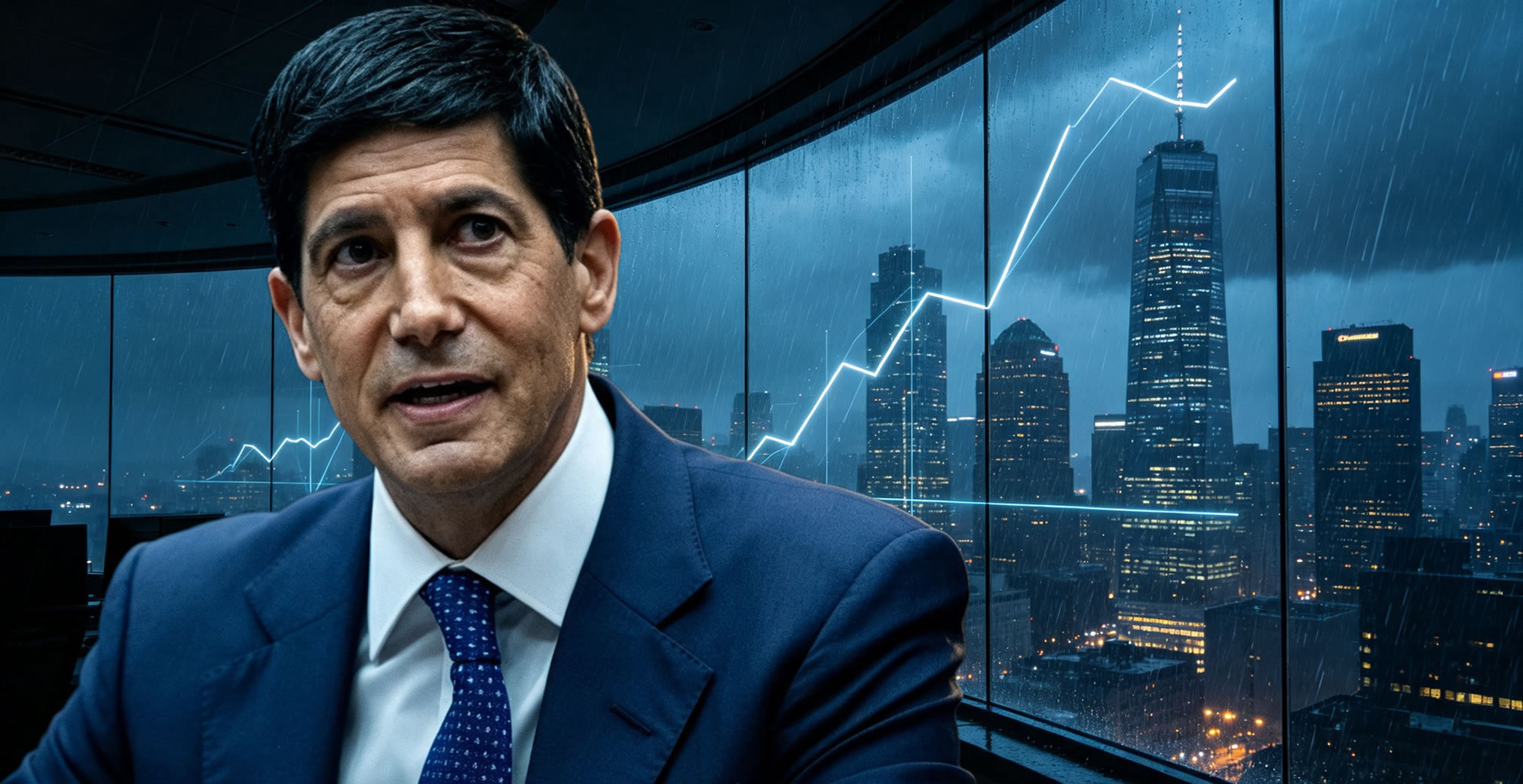
Federal Reserve Chair Kevin Warsh is all but certain to keep benchmark interest rates unchanged at this week’s Federal Open Market Committee meeting, backed by three interlocking rationales grounded in his monetary policy worldview, sweeping institutional overhaul plans, and fraught political tensions between the U.S. central bank and the Trump White House.
The FOMC remains starkly divided less than three months into Warsh’s tenure. At his second policy gathering back in July, policymakers voted 9-3 to leave the federal funds rate anchored at 3.5% to 3.75%, with three hawkish members dissenting in favor of tighter monetary policy. Markets have already priced in this cautious policy stance: investors have slashed bets on an imminent rate increase, yet long-dated U.S. Treasury yields surged to their highest mark since 2007 in the wake of Warsh’s post-meeting press conference. The lopsided bond-market reaction laid bare mounting Wall Street skepticism over his inflation-fighting credibility and his capacity to unify a fractured Federal Reserve.
Warsh’s personal take on inflation dynamics stands as the primary driver behind his decision to delay tightening. Since taking office in late May, phasing out forward guidance has served as the cornerstone of his policy agenda. For decades, prior Fed chairs relied on explicit forward guidance to telegraph future rate paths and steer market expectations; Warsh rejects the practice outright, arguing rigid precommitments strip the Fed of nimbleness and drown out unfiltered price signals from global financial markets. He has repeatedly refused to lay out concrete economic thresholds that would trigger rate hikes or cuts when pressed by reporters.
Though he declines to formalize a rigid policy reaction function for the FOMC, his congressional testimony and public remarks draw a clear line between transitory supply-side price shocks and persistent, demand-fueled inflation that warrants aggressive rate hikes. Two forces are currently roiling U.S. price levels: renewed energy price volatility triggered by the collapse of the U.S.-Iran ceasefire, and spiking semiconductor and electricity costs as U.S. corporations ramp up capital spending to build nationwide AI infrastructure.
Warsh categorizes both as one-off supply shifts, not entrenched inflation requiring monetary intervention. During mid-July Senate testimony, he emphasized that surging gasoline and diesel prices lie far beyond the Fed’s control; U.S. domestic refining capacity is operating at full capacity, leaving no quick way to ramp up fuel supply and cool prices. The June Consumer Price Index print, released just before fresh hostilities erupted across the Middle East, even showed broad consumer prices edging lower — further validating his view that fleeting energy spikes do not justify immediate tightening.
He applies identical logic to AI-driven cost pressures. Corporate outlays for artificial intelligence have lifted hardware and utility expenses across industries, yet Warsh contends market supply chains will adapt over time to meet elevated demand, erasing temporary price gains. Until isolated shocks morph into economywide wage-price spirals, the Fed chief sees no urgent case for lifting rates.
His sweeping Fed reform agenda constitutes the second major reason to pause rate adjustments. Shortly after assuming the chairmanship, Warsh launched five internal task forces tasked with overhauling nearly every pillar of U.S. monetary policy, with comprehensive findings due late 2026 and beyond. The panels are mandated to reassess the Fed’s official inflation yardstick, unpack AI’s overlapping impacts on economic growth and pricing, revamp central bank data frameworks, rewrite public communications rules, and restructure the format and frequency of post-meeting press briefings.
Rushing through a rate hike now would preempt the task forces’ ongoing work and render their findings moot. To tighten policy ahead of their final reports would signal Warsh views the Fed’s existing inflation analysis toolkit as fully functional — a conclusion he set out to disprove when launching the reform initiative. By hitting pause on rate moves, he buys critical time to finalize research, build internal consensus for long-term structural changes, and lock in his policy legacy before enacting major monetary shifts. A premature hike would only undermine the signature reform effort designed to restore the Fed’s analytical authority, a compromise Warsh refuses to entertain.
The third consideration hinges on delicate Washington political calculus. Warsh has repeatedly pledged to set monetary policy independent of White House pressure, yet he cannot ignore President Donald Trump’s agenda amid ongoing turnover on the Fed Board of Governors. Former Chair Jerome Powell retains his board seat through January 2028, but widespread expectations hold he will resign once the Fed Inspector General releases a summer report probing costly overruns on central bank facility renovations. If the U.S. Department of Justice declines to pursue additional enforcement action against Powell following the investigation, the former chair will likely step down voluntarily, opening a pivotal board vacancy Warsh hopes to fill with a policy ally aligned with his agenda.
Trump has openly lobbied for lower interest rates while lambasting Powell’s lingering influence within the Fed. Treasury Secretary Scott Bessent has even branded Powell a “shadow Fed chair” quietly working to thwart the administration’s economic priorities. A near-term rate hike would hand Trump powerful rhetorical ammunition to amplify those conservative narratives, empowering the president to seize full control over the nomination process for Powell’s successor. To preserve leverage over the next board appointment, Warsh must avoid policy moves that exacerbate internal Fed divisions for partisan gain. He also must navigate a separate external probe into the Fed’s mismanagement of the 2023 regional banking crisis, which political observers warn could be weaponized to oust sitting governors. Cautious rate policymaking shields the central bank from partisan retaliation ahead of both investigations’ conclusions.
For a Fed chairman who prioritizes institutional credibility above all else, the bond market’s split reaction to his first two FOMC press conferences has proven deeply troubling. Following the July vote to hold rates steady, two-year Treasury yields fell as traders priced out near-term tightening risks, while 30-year yields surged to an 18-year peak. The steepening yield curve signals investors believe Warsh will delay necessary inflation containment today, only to be forced into far more aggressive tightening down the line to rein in persistent price pressures.
Leading Fed watchers have panned his vague, often contradictory communications style. Jon Hilsenrath, a veteran Fed analyst, noted the Treasury market suffered a broad selloff following Warsh’s press briefing owing to his failure to articulate clear policy triggers. JPMorgan Chase chief U.S. economist Michael Feroli echoed those concerns, arguing the chair’s refusal to define a reaction function and his openness to revisiting the Fed’s 2% inflation target have eroded market faith in the central bank’s commitment to taming rising prices. The Fed’s preferred inflation gauge — the Personal Consumption Expenditures index — stands at 4.1% annually, more than double the official target after running above 2% for more than five consecutive years.
Warsh will eventually have to deliver the first rate hike of his tenure; more FOMC hawks are poised to join the dissent camp if inflation fails to cool in the coming months. Even so, the confluence of his inflation outlook, ongoing institutional reforms, and precarious political balancing act gives him ample justification to stand pat this week. The months ahead will determine whether his patient, nuanced policy framework repairs the Fed’s tarnished credibility — or deepens rifts both inside the central bank and across global fixed-income markets.
Subscribe to Unlock this Article
Complete digital access to quality Glebors financial topic with expert analysis from industry leaders.
Glebors Financial Become an Glebors subscriber
Make informed decisions with the Glebors.Keep abreast of significant corporate, financial and political developments around the world. Stay informed and spot emerging risks and opportunities with independent global reporting, expert commentary and analysis you can trust.
- Financial reports are independent global financial research reports that you can trust. The information keeps pace with important companies around the world, global financial and political dynamics, independent insights and unique perspectives, helping you catch up with the latest information and identify the potential risks and opportunities.
- Our financial special reports use professional knowledge to fully understand the market situation, break down the perspectives of experts, and rationally analyze data to help you eliminate noise, accurately identify the changes in political, economic and social trends, and fully aware of the risks and grasp the opportunities.
- Our goal is to help shape the uniqueness of each research space we are involved in. Our research provides readers with new insights in terms of the global economy, financial markets, asset classes and risk management. We will continue to present new insights into global markets and industries.
Financial Reports
If you want to know more details to provide support for your investment and business activities, this financial report that we have selected for you can give you what you want, please subscribe to read it. Glebors Global Finance aims to provide business elites and decision makers with daily business news, data interpretation, in-depth analysis and commentary.
Glebors Global Finance’s amount of financial information digs into deeply major events and economic data that have a huge impact on the global economy, based on in-depth industrial research and special reports, with a truly global perspective。 Financial reports have become "must-read" financial information for senior managers. Gribs Global Finance currently has more than2.85 million Chinese readers and more than 3.5 million overseas readers, including more than 600,000 high-end member readers.